
The world's economic landscape in 2026 will be shaped through one force that is central to the entire picture that is China's transformation from "world's factory" to a "global innovation hub." In spite of growing geopolitical tensions as well as a host of trade snares from Western nations, China's export and import machine is remarkably robust even as it is shifting towards its Global South.
The year 2025 was the one in which China had a record-breaking trade surplus $1.19 trillion which is a testimony to the depth of manufacturing that is unmatched as well as a shift in strategic direction towards technological innovation that is of high value. This report examines the present situation of trade in China as well as the major commodities driving its expansion, as well as the changing geopolitical landscape that is shaping the future of China's economy.
1. The Macro Picture: Record Surpluses and Reorientation
At the time of 2026's early days The China's trading profile has been characterised by an "dual-speed" recovery. As domestic consumption is facing challenges, exports has risen to fill in the gaps.
The 2025 Trade Performance
As per the most up-to-date figures provided by the National Bureau of Statistics and customs statistics, China's overall exports increased by 5.5 percent over 2025 to roughly $3.77 trillion. However, imports have remained stagnant ( 0.03% growth) which led to the record-setting surplus.
This gap's widening has two major trends to watch:
-
Industrial Overcapacity Chinese manufacturing companies are more often looking at international markets for production capacity that isn't able to be met by demand from within the country.
-
Import Substitution By implementing"Made in China 2025 "Made in China 2025" as well as the following "Self-Reliance" initiatives, China has succeeded in replacing many technological imports, including semiconductors and special machinery -- with domestic options.
2. Export Analysis: The Rise of the "New Three"
Over the years, Chinese exports were associated with textiles, electronic toys and other low-end gadgets. The narrative of today is shifting towards China's "New Three" (Xin San Yang): Electric vehicles (EVs) and Lithium-ion batteries and Solar items.
Read also: When Is the Best Time to Buy Bitcoins in China?
Top Export Categories (2025-2026)
| Rank | Category | Key Drivers |
| 1 | Electrical Machinery | Semiconductors AI servers and connected circuits. |
| 2 | Mechanical Equipment | Industrial robots as well as automation of assembly lines. |
| 3 | Automotive (EVs) | Rapid expansion to Europe, ASEAN, and Brazil. |
| 4 | Green Energy Tech | Solar panels as well as batteries with large capacity. |
| 5 | Shipbuilding | Specialized LNG carriers as well as modern container ships. |
The EV Revolution
By 2025, China has consolidated its position as the world's top auto exporter. While both the US as well as the EU have brought in substantial tariffs (reaching more than 100% in certain US areas), Chinese firms have moved to build factories locally in countries such as Hungary, Mexico, and Thailand. The "localized export" strategy allows China to circumvent any trade barriers, while retaining the market shares.
3. Import Analysis: A Hunger for Resources
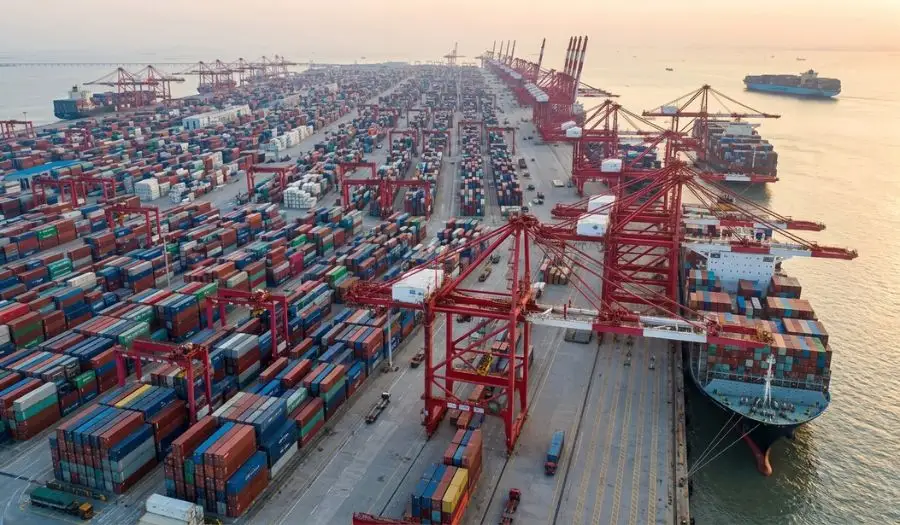
China's strategy for imports has evolved into more strategic and focused. Although it imports less final consumer products but its need for high-end raw materials and components continues to be very high.
Essential Commodities
- Energy Natural gas and crude oil imports continue to be the most significant burden on China's foreign currency mostly sourced through Russia, Saudi Arabia, as well as the GCC.
- Minerals and ore To help fuel the green revolution, China has intensified imports of lithium, copper as well as iron ore. Brazil and Australia remain important partners in this regard, regardless of political turmoil.
- Agriculture Goods Security of food is an absolute priority. China is the largest importer of corn, soybeans as well as meat. Brazil overtaking that of the United States as the primary source of food.
- High-End Chips Although domestic capabilities are expanding, China still imports significant amounts of premium GPUs as well as specialized electronic components in Taiwan as well as South Korea for its burgeoning AI sector.
4. Shifting Alliances: Major Trading Partners
The "Geometry of Trade" is shifting. Although China is still a major consumer of Chinese goods, the United States remains a massive buyer of Chinese items but the relationship between China and America has transformed from cooperation into controlled competition.
ASEAN: The New Frontier
For the third year in a row that is, the ASEAN group is China's biggest trading partner. Trade with ASEAN was more than 980 billion dollars by 2025.
-
The "Factory to the Factory" Model: China now exports intermediate products (parts and other components) into Vietnam, Malaysia, and Thailand and Thailand, where they're made into final products, and export back to the West. This lets China to hold its position over the supply chain even when the final assembly shifts to other locations.
The Return to Europe
In an unexpected 2026 change, Germany reclaimed its position as a top partner. The trade volume in the region between China and Germany was EUR251.8 billion in 2025. Even with "de-risking" rhetoric, German industry's dependence on Chinese components as well as the Chinese market continues to be a keystone for European trade.
The Global South and BRICS+
Through the development of BRICS, China has deepened its ties to Brazil, Russia, and the Middle East. Russia particularly has been a major trading partner and the trade between them is dominated by Chinese cars and electronic devices in exchange for Russian energy.
5. Strategic Challenges: Tariffs and Geopolitics
"China Shock 2.0 "China Shock 2.0"--a flood of cheap Chinese exports that are flooding markets around the world has resulted in a defensive response.
- Tariff Barriers The US continues to maintain the most high levels of tariffs ever since WWII. As a result, Chinese exporters have cut costs by averaging 8.8% to keep their prices in the market, thereby absorbing costs of taxes to ensure that they can continue their volumes.
- Supply Chain Resilience Resilience of Supply Chains "China Plus One" strategy (where businesses maintain their base in China however expand to India and/or Mexico) is now a common method. The advantages of China's infrastructure and efficiency at ports (e.g., Shanghai and Ningbo-Zhoushan) makes it challenging to completely decouple.
- Disruptions to Maritime Operations: Tensions continue to rage within the South China Sea and recent tensions within the Strait of Hormuz (early 2026) are causing an increase in shipping prices and insurance premiums, which puts stress on the already low margins for exports.
6. Future Outlook: 2026 and Beyond
According to the consensus of economists, 2026's remaining timeframe will be that China will be able to rely on exports to help achieve the country's 5-percent growth in GDP..
Key Trends to Watch:
- AI-Integrated Trade China is the largest exporter of AI-integrated equipment. from "smart" cranes in Latin American ports to automated tractor within Africa, Chinese tech is developing into the central operating system for Africa and the Global South.
- Currency Internationalization: More trade is being settled in Yuan (RMB), particularly with oil-producing nations and Russia, reducing China's vulnerability to dollar-based sanctions.
- Digital Trade It is the "Silk Road E-commerce" initiative has grown and incorporating Chinese platforms such as Temu, Shein, and Alibaba logistics companies creating direct-to consumer pipelines that bypass traditional retailers importers.
Conclusion
China's trade and import landscape by 2026 will be a case study of the process of adaptation. As China's "Golden Age" of unrestricted access to Western markets is over, China has successfully leveraged its industrial dominance to enshrine it into the economics in Asia's Global South and ASEAN.
A record trade surplus $1.2 trillion represents a two-edged weapon: it demonstrates the power of China's industry, but it also contributes to the worldwide trend towards protectionist policies. For investors and business owners The main takeaway from this is obvious: China is no longer only offering "things"; it is selling infrastructure and the technology that power the world of today.